Antibiotic Use Linked to Later Colorectal Polyp Formation

Antibiotic use in early to mid-adulthood was associated with an increased risk of developing colorectal adenomas later in life, a new observational study has found.

Fonte: Antibiotic Use Linked to Later Colorectal Polyp Formation

Resumindo: intervenções no microbioma intestinal, mesmo que bem intencionadas, não passarão incólumes,

How Safe is Medical Tx for Pediatric Appendicitis?

Antibiotics are an option, but carry higher risk of failure vs surgery

Fonte: How Safe is Medical Tx for Pediatric Appendicitis?

As voltas que o mundo dá! No meus anos de estudante a simples menção da possibilidade de tratar clinicamente uma apendicite seria motivo suficiente reprovação (e claro, de chacota). Agora, ainda que não como rotina, admite-se essa possibilidade em certas circunstâncias. Vivendo e aprendendo.

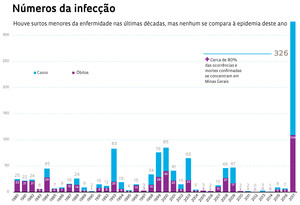
Primoroso resumo da epidemiologia atual da febre amarela 

No século XXI, o avanço da globalização de pessoas e de mercadorias, o desmatamento e a erosão das fronteiras entre a zona rural e a urbana e a presença de grandes contingentes populacionais não imunizados parecem ter criado um ambiente favorável para o recrudescimento de epidemias de febre amarela. Até recentemente, a doença, que tem uma vacina eficiente desde os anos 1930, era vista como sob controle ou restrita a regiões endêmicas dos dois continentes em que ocorre, a porção subsaariana da África, uma das áreas mais pobres do mundo, e rincões da América do Sul, geralmente as calhas dos…

Global TB Control Falling Short, Drug Resistance Rising

Expanded initiatives to control TB and fight the global rise in multidrug-resistant TB are needed to eliminate the disease, experts say on the eve of World TB Day, March 24.

Fonte: Global TB Control Falling Short, Drug Resistance Rising

Artigo do Medscape alusivo ao dia mundial de combata a tuberculose.

Effect of laminar airflow ventilation on surgical site infections: a systematic review and meta-analysis.

BACKGROUND: The role of the operating room’s ventilation system in the prevention of surgical site infections (SSIs) is widely discussed, and existing guidelines do not reflect current evidence. In this context, laminar airflow ventilation was compared with conventional ventilation to assess their effectiveness in reducing the risk of SSIs. METHODS: We searched MEDLINE, Embase, Cochrane Central Register of Controlled Trials, and WHO regional medical databases from Jan 1, 1990, to Jan 31, 2014. We updated the search for MEDLINE for the period between Feb 1, 2014, and May 25, 2016. We included studies most relevant to our predefined question: is the use of laminar airflow in the operating room associated with the reduction of overall or deep SSI as outcomes in patients of any age undergoing surgical operations? We excluded studies not relevant to the study question, studies not in the selected languages, studies published before Jan 1, 1990, or after May 25, 2016, meeting or conference abstracts, and studies of which the full text was not available. Data were extracted by two independent investigators, with disagreements resolved through further discussion. Authors were contacted if the full-text article was not available, or if important data or information on the paper’s content was absent. Studies were assessed for publication bias. Grading of recommendations assessment, development, and evaluation was used to assess the quality of the identified evidence. Meta-analyses were done with RevMan (version 5.3). FINDINGS: We identified 1947 records of which 12 observational studies were comparing laminar airflow ventilation with conventional turbulent ventilation in orthopaedic, abdominal, and vascular surgery. The meta-analysis of eight cohort studies showed no difference in risk for deep SSIs following total hip arthroplasty (330 146 procedures, odds ratio [OR] 1·29, 95% CI 0·98-1·71; p=0·07, I(2)=83%). For total knee arthroplasty, the meta-analysis of six cohort studies showed no difference in risk for deep SSIs (134 368 procedures, OR 1·08, 95% CI 0·77-1·52; p=0·65, I(2)=71%). For abdominal and open vascular surgery, the meta-analysis of three cohort studies found no difference in risk for overall SSIs (63 472 procedures, OR 0·75, 95% CI 0·43-1·33; p=0·33, I(2)=95%). INTERPRETATION: The available evidence shows no benefit for laminar airflow compared with conventional turbulent ventilation of the operating room in reducing the risk of SSIs in total hip and knee arthroplasties, and abdominal surgery. Decision makers, medical and administrative, should not regard laminar airflow as a preventive measure to reduce the risk of SSIs. Consequently, this equipment should not be installed in new operating rooms. FUNDING: None.

Fonte: Effect of laminar airflow ventilation on surgical site infections: a systematic review and meta-analysis.


OPAT_FINAL_REVISADO.pdf

Fonte: OPAT_FINAL_REVISADO.pdf

Pubicação da Sociedade Brasileira de Infectologia sobre o uso ambulatorial de terapia antimicrobiana parenteral. Muito útil tanto para coordenadores de serviços de Home-Care, quanto para prescritores destes mesmos serviços.

Challenges in Infective Endocarditis

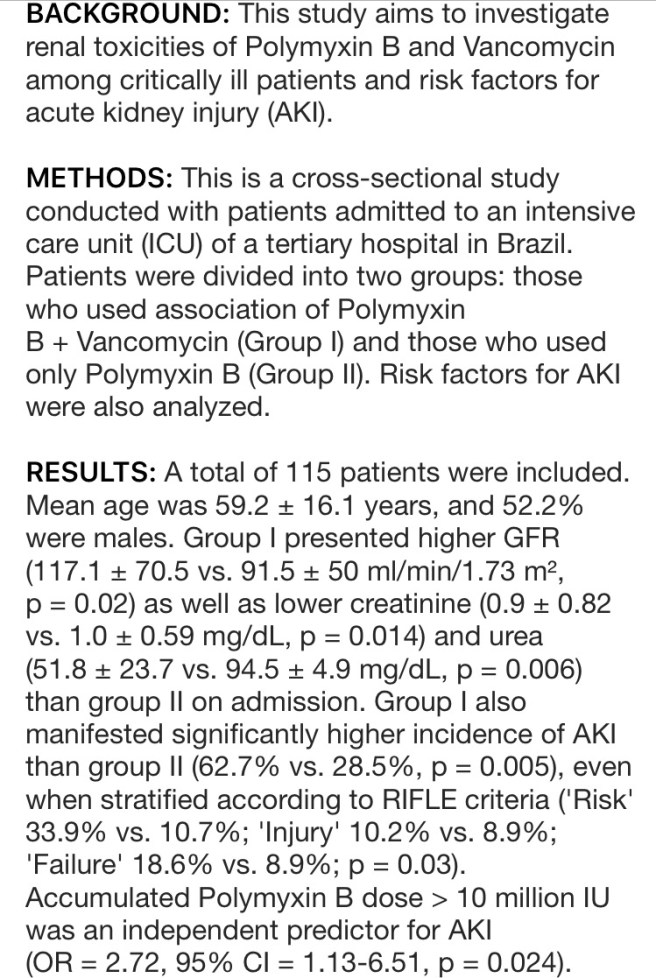
image91111

Even with optimal care, mortality from infective endocarditis is strikingly high. Why is it so challenging to treat, and what is being done to improve both prevention and outcomes?

Fonte: Challenges in Infective Endocarditis

Belíssima revisão, focada principalmente nas mudanças que esta patologia apresentou com o progresso da medicina moderna. Completa, extensa, recheada de referências e em inglês. Mas se alguém tem planos de uma revisão ou estudo, comece por aqui!

Antibiotic Prophylaxis Cuts STI Rates

Marked reduction in syphilis and chlamydia in high-risk men

Fonte: Antibiotic Prophylaxis Cuts STI Rates

Uso de doxiciclina em até 72 de uma relação sexual pode reduzir a incidência de 2 DST’s frequentes ( sífilis e Clamydia).

Posso elencar um sem número de argumentos contra essa estratégia, como por exemplo que com o tempo certamente a doxiciclina deve perder eficácia, sem falar no risco de estimular  as pessoas a usar cada vez menos metodos de barreira para a prevenção de DST’s. Mas os americanos receberam este trabalho com furor. Aparentemente eles adoram este tipo de abordagem preventiva mais do que eu.

A systematic review and meta‐analysis of the relative efficacy and safety of treatment regimens for HIV‐associated cerebral toxoplasmosis: is trimethoprim‐sulfamethoxazole a real option?

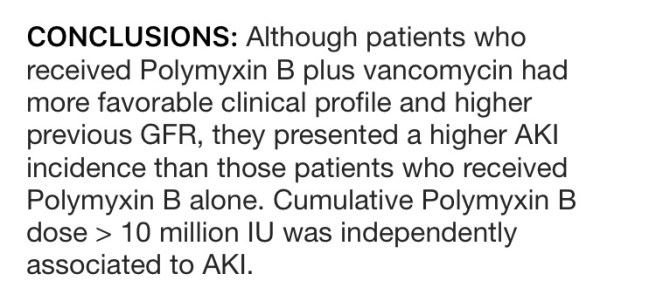
img_0253

Fonte: A systematic review and meta‐analysis of the relative efficacy and safety of treatment regimens for HIV‐associated cerebral toxoplasmosis: is trimethoprim‐sulfamethoxazole a real option?

Resumindo: Sim, sulfametoxazol – trimetoprim é um esquema tão bom quanto sulfadiazina – pirimetamina na neurotoxoplasmose.