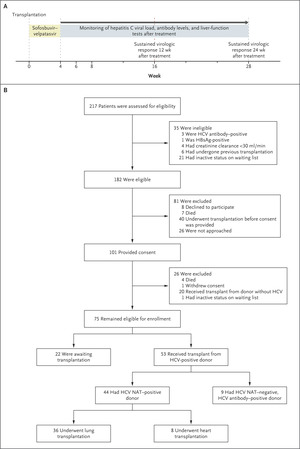
Heart and Lung Transplants from HCV-Infected Donors to Uninfected Recipients | NEJM

Original Article from The New England Journal of Medicine — Heart and Lung Transplants from HCV-Infected Donors to Uninfected Recipients

Fonte: Heart and Lung Transplants from HCV-Infected Donors to Uninfected Recipients | NEJM

 Trabalho ousado. Usar órgãos de doadores com viremia para HCV e iniciar precocemente terapia com DAAs para evitar a contaminação do receptor. Ousado e aparamente bem sucedido.

A Trial of a Shorter Regimen for Rifampin-Resistant Tuberculosis | NEJM

Original Article from The New England Journal of Medicine — A Trial of a Shorter Regimen for Rifampin-Resistant Tuberculosis

Fonte: A Trial of a Shorter Regimen for Rifampin-Resistant Tuberculosis | NEJM

Superbactéria circulou no Brasil antes de ser descrita pela China

Fonte: Superbactéria circulou no Brasil antes de ser descrita pela China

Um estudo feito por pesquisadores da Faculdade de Medicina e do Instituto de Medicina Tropical da Universidade de São Paulo (USP) descobriu que a bactéria Klebsiella pneumoniae, super-resistente a antibióticos, já circulava pelo Brasil em 2011, quatro anos antes de ser descrita na China, em 2015.O estudo foi publicado na revista científica Bone Marrow Transplantation, do grupo Nature.

Decolonization to Reduce Postdischarge Infection Risk among MRSA Carriers | NEJM

Original Article from The New England Journal of Medicine — Decolonization to Reduce Postdischarge Infection Risk among MRSA Carriers

Fonte: Decolonization to Reduce Postdischarge Infection Risk among MRSA Carriers | NEJM

Postdischarge MRSA decolonization with chlorhexidine and mupirocin led to a 30% lower risk of MRSA infection than education alone.

Infecção prévia pelo vírus da dengue pode gerar imunidade contra o Zika

Infecção prévia pelo vírus da dengue pode gerar imunidade contra o Zika

https://portugues.medscape.com/verartigo/6503257

Um estudo brasileiro publicado no periódico Science[1] sugere que a infecção prévia pelo vírus da dengue pode proteger contra o vírus Zika.

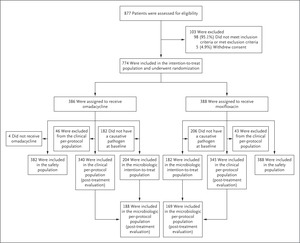
Omadacycline for Community-Acquired Bacterial Pneumonia | NEJM

Original Article from The New England Journal of Medicine — Omadacycline for Community-Acquired Bacterial Pneumonia

Fonte: Omadacycline for Community-Acquired Bacterial Pneumonia | NEJM

 Edição on-line da NEJM apresenta dois artigos dessa nova droga em comparação com opções “consagradas”, mostrando não inferioridade.

Risk of Herpes Zoster Prior to and Following Cancer Diagnosis and Treatment: A Population-Based Prospective Cohort Study.

E08EC8A9-60BB-4AF1-90A1-1EFE40FAB490

Background: Information on the risks of herpes zoster (zoster) preceding a cancer diagnosis and the role of cancer treatment on risk is limited.

Methods: This was a prospective cohort of 241497 adults, with mean age 62.0 years at recruitment (2006-2009), linked to health datasets from 2006 to 2015. The relation between cancer diagnosis, treatment, and zoster risk was analyzed using time-varying proportional hazards models.

Results:  Over 1760 481 person-years of follow-up, 20286 new cancer diagnoses and 16350 zoster events occurred. Participants with hematological and solid cancer had higher relative risks of zoster than those without cancer (adjusted hazard ratio [aHR], 3.74 [95% confidence interval {CI}, 3.11-4.51] and 1.30 [95% CI, 1.21-1.40], respectively). Compared to those without cancer, zoster risk was also elevated prior to a hematological cancer diagnosis (aHR for 1-2 years prior, 2.01 [95% CI, 1.31-3.09]), but this was not the case for solid cancers (aHR for 1-2 years prior, 0.90 [95% CI, .75-1.07]). Compared to those without cancer, zoster risk among participants with solid cancers receiving chemotherapy was greater than in those without a chemotherapy record (aHR, 1.83 [95% CI, 1.60-2.09] and 1.16 [95% CI, 1.06-1.26], respectively).

Conclusions: For hematological cancer, increases in zoster risk are apparent in the 2 years preceding diagnosis and treatment; for solid organ cancers, the increased risk appears to be largely associated with receipt of chemotherapy.

Seven versus fourteen Days of Antibiotic Therapy for uncomplicated Gram-negative Bacteremia: a Non-inferiority Randomized Controlled Trial.

read_icon_512

Background: Gram-negative bacteremia is a major cause of morbidity and mortality in hospitalized patients. Data to guide the duration of antibiotic therapy are limited.

Methods: Randomized, multicenter, open-label, non-inferiority trial. Inpatients with Gram-negative bacteremia, afebrile and hemodynamically stable for at least 48 hours, were randomized to receive 7 (intervention) or 14 days (control) of covering antibiotic therapy. Patients with uncontrolled focus of infection were excluded. The primary outcome at 90 days was a composite of all-cause mortality; relapse, suppurative or distant complications; and re-admission or extended hospitalization (>14 days). The non-inferiority margin was set at 10%.

Results: We included 604 patients (306 intervention, 298 control) between January 2013 and August 2017 in three centers in Israel and Italy. The source of the infection was urinary in 411/604 (68%); causative pathogens were mainly Enterobacteriaceae (543/604, 90%). A 7-day difference in the median duration of covering antibiotics was achieved. The primary outcome occurred in 140/306 (45.8%) patients in the 7 days group versus 144/298 (48.3%) in the 14 days group (risk difference [RD] -2.6%, 95% confidence interval [CI] -10.5% to 5.3%). No significant differences were observed in all other outcomes and adverse events, except for a shorter time to return to baseline functional status in the short therapy arm.

Conclusions: In patients hospitalized with Gram-negative bacteremia achieving clinical stability before day 7, an antibiotic course of 7 days was non-inferior to 14 days. Reducing antibiotic treatment for uncomplicated Gram-negative bacteremia to 7 days is an important antibiotic stewardship intervention. (ClinicalTrials.gov number, NCT01737320).


Are coagulase-negative staphylococci virulent?

71653777-377B-4920-8A67-B4508C2E6F00

BACKGROUND: Progress in contemporary medicine is associated with an increasing number of immunocompromised individuals. In this vulnerable group, the underlying disease together with long-term hospitalization and the use of medical devices facilitate infections by opportunistic pathogens for which coagulase-negative staphylococci (CoNS) represent a prime example.

OBJECTIVES: The diversity of CoNS with species- and strain-specific differences concerning virulence and clinical impact is highlighted. A focus will be on the ability of CoNS to generate biofilms on biotic and abiotic surfaces, which enables skin and mucosa colonization as well as establishment of CoNS on indwelling foreign bodies.

SOURCES: Literature about the virulence of CoNS listed in PubMed has been reviewed.

CONTENT: The vast majority of catheter-related and prosthetic joint infections as well as most other device-related infections are caused by CoNS, specifically by Staphylococcus epidermidis and Staphylococcus haemolyticus. A common theme of CoNS infections is a high antibiotic resistance rate which often limits treatment options and contributes to the significant health and economic burden imposed by CoNS.

IMPLICATIONS: Breaching the skin barrier along with the insertion of medical devices offers CoNS opportunities to get access to host tissues and to sustain there by forming biofilms on foreign body surfaces. Biofilms represent the perfect niche to protect CoNS from both the host immune response and the action of antibiotics. Their particular lifestyle combined with conditions that facilitate host colonization and infection led to the growing impact of CoNS as pathogens. Moreover, CoNS may serve as hidden reservoirs for antibiotic resistance and virulence traits.

Falta evidências de benefícios no uso de lactobacilos em crianças com gastroenterite

download12

Dois artigos publicados na última edição do NEJM abordam o uso de formulações com lactobacilos para crianças com gastroenterite e chegaram a mesma conclusão.

Primeiro artigo – clique aqui

Para o segundo artigo clique aqui