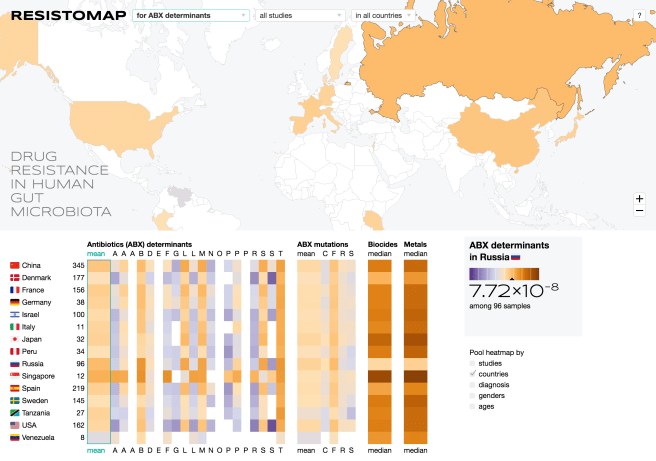
Drug resistance in human gut microbiota
Fonte: Resistomap. Visualization by Data Laboratory
Dica da página do face da Dra. Simone Noér, hoje no RJ, mas que foi minha contemporânea na UNICAMP.

Drug resistance in human gut microbiota
Fonte: Resistomap. Visualization by Data Laboratory
Dica da página do face da Dra. Simone Noér, hoje no RJ, mas que foi minha contemporânea na UNICAMP.
 For nearly two years, a killer stalked the patients of Providence Alaska Medical Center. It was a bacteria called Acinetobacter baumannii, a common cause of infections in hospitals. This one was different.
Fonte: Stronger ‘Superbugs,’ and No New Drugs to Fight Them
Este artigo navega pela problemática do desenvolvimento de novas opções antimicrobianas, focando nas dificuldades logísticas e financeiras diante da urgência urgentíssima de novas drogas conta germes multirresistentes.
Estudo muito bem desenhado, visando determinar o papel dos funcionários carreadores e do ambiente na transmissão de MARSA em pacientes internados em UTI. Pelo menos para mim o resultado foi surpreendente.
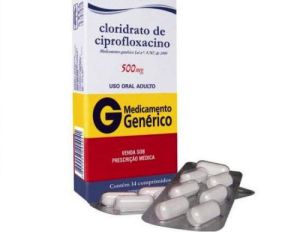
Dr Brad Spellberg explains why many widely held beliefs about antibiotics and resistance are false.
Fonte: Antibiotics: 5 Myths Debunked
Muito interessante. 5 mitos em terapia antimicrobiana que não se sustentam diante dos fatos. Do Medscape.

BACKGROUND: Fosfomycin is increasingly called upon for the treatment of multi drug-resistant (MDR) organisms causing urinary tract infection (UTI). We reviewed oral fosfomycin use for UTI treatment in a large UK hospital. The primary goal was to audit our clinical practice against current national guidelines. Secondary aims were to identify factors associated with treatment failure, and to investigate the potential for using fosfomycin in patients with co-morbidities. METHODS: We retrospectively studied 75 adult patients with UTI who received 151 episodes of treatment with fosfomycin from March 2013 to June 2015. We collected clinical data from our electronic patient record, and microbiology data pre- and post- fosfomycin treatment. We recorded additional data for patients receiving prolonged courses in order to make a preliminary assessment of safety and efficacy. We also reviewed >18,000 urinary tract isolates of Escherichia coli and Klebsiella spp. processed by our laboratory over the final year of our study period to determine the prevalence of fosfomycin resistance. RESULTS: There was a significant increase in fosfomycin treatment episodes over the course of the study period. Co-morbidities were present in 71Â % of patients. The majority had E. coli infection (69Â %), of which 59Â % were extended spectrum beta-lactamase (ESBL)-producers. Klebsiella infections were more likely than E. coli to fail treatment, and more likely to be reported as fosfomycin resistant in cases of relapse following treatment. There were no adverse events in five patients treated with prolonged fosfomycin. Among all urinary isolates collected over a year, fosfomycin resistance was documented in 1Â % of E. coli vs. 19Â % of Klebsiella spp. (pâ<â0.0001). CONCLUSIONS: We report an important role for oral fosfomycin for MDR UTI treatment in a UK hospital population, and based on the findings from this study, we present our own local guidelines for its use. We present preliminary data suggesting that fosfomycin is safe and effective for use in patients with complex comorbidities and over prolonged time periods, but may be less effective against Klebsiella than E. coli.
 Researchers have proposed three key risk factors for transmission and acquisition of carbapenemase-producing carbapenem-resistant Enterobacteriaceae.
Fonte: 3 Common Causes of Drug-Resistant Bacteria Transmission

Klebsiella pneumoniae bacteria exposed to chlorhexidine disinfectants can develop resistance to colistin, a last-resort antibiotic.
Fonte: Chlorhexidine Linked to Colistin Resistance
Ai, ai, ai, ai!!! Só faltava essa! A chlorhexedina é amplamente usada tanto em banhos pré operatórios como para desinfecção e foi um grande avanço em relação ao povedine. Se estas informações se comprovarem as CCIH’s terão que rever seus protocolos.
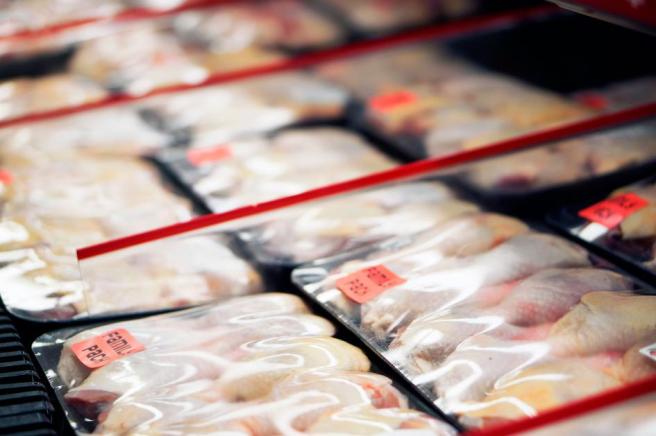 Nearly a quarter of chickens tested from U.K. supermarkets are infected with bacteria that is resistant to drugs important to human health.
Fonte: Drug-Resistant Bacteria in Food Persists, Despite Safeguards
Mais uma evidência de que o uso indiscriminado de antimicrobianos na indústria de alimentos é parte do problema das bactérias multirresistentes (mas só parte – este é um problema de causas multifatoriais).

An outbreak of infections associated with contaminated duodenoscopes highlights the need for better disinfection practices to prevent future transmissions.
Fonte: Outbreaks Associated With Duodenoscopes
Trata-se de uma revisão dos casos de transmissão de enterobactérias resistentes aos carbapenêmicos (meropenem e cia…) em centros médicos americanos e europeus por endoscópios contaminados usados para colangiografia retrógrada. Reforça a importância de se estar atento ao máximo rigor na aplicação de técnicas de segurança em procedimentos com dispositivos invasivos.

If our behavior changes when light, or attention, is shone on it, this is called the ‘Hawthorne effect’ — and it is alive and well in our approach to handwashing, says Dr Lundberg.
Fonte: Doctors and Nurses: Wash Your Hands!
Campanha do Medscape. Quem sabe em inglês a turma acredite…
 27863959
 blog infectologia em geral