
Original Article from The New England Journal of Medicine — Persistence of Zika Virus in Body Fluids — Final Report
Fonte: Persistence of Zika Virus in Body Fluids — Final Report | NEJM

Original Article from The New England Journal of Medicine — Persistence of Zika Virus in Body Fluids — Final Report
Fonte: Persistence of Zika Virus in Body Fluids — Final Report | NEJM

Since the last epidemiological update on 31 August 2018, European countries have reported 530 new West Nile virus (WNV) cases and 52 deaths. The number of WNV infections reported so far exceeds the total number of infections in the previous five years.

Editorial from The New England Journal of Medicine — New Promise for Vaccines against Tuberculosis

The first-in-class antiviral drug reduced duration of influenza symptoms and viral shedding compared with both placebo and oseltamivir in phase 2 and phase 3 randomized trials.
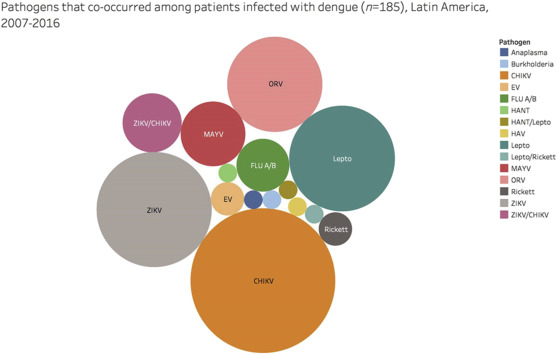
The causes of acute febrile illness (AFI) in Latin America are diverse and their complexityincreases as the proportion of fever due to malaria decreases, as malaria controlmeasures and new pathogens emerge in the region. In this context, it is importantto shed light on the gaps in the epidemiological characteristics and the geographicrange for many AFI aetiologies.
Fonte: Epidemiology of acute febrile illness in Latin America – Clinical Microbiology and Infection

Original Article from The New England Journal of Medicine — Partial Oral versus Intravenous Antibiotic Treatment of Endocarditis
Fonte: Partial Oral versus Intravenous Antibiotic Treatment of Endocarditis | NEJM
Tratar endocardite bacteriana com antimicrobianos intravenosos e internação hospitalar por todo o período de tratamento sempre foi mais do que uma recomendação para nós infectologistas. Mais se parece com um dogma .
Esse trabalho lança uma visão diferente sobre esse tema, e com apenas 10 dias de tratamento intravenoso, para em seguida completar com uso oral e inclusive em regime ambulatorial. Será que no futuro essa opção estará incorporada na prática clínica ?

O surto de febre amarela vivenciado pelo Brasil entre o fim de 2016 e o início de 2018, o maior dos últimos 100 anos, ganhou terreno apenas pela via silvestre de transmissão da doença, na qual mosquitos dos gêneros Sabethes e Haemagogus, que habitam copas de árvores, transmitiram o vírus primeiro para macacos e depois para seres humanos. Não houve disseminação da doença por meio do mosquito Aedes aegypti, de hábitos urbanos, que transmite outras doenças, como zika, dengue e chikungunya. Não há registro de febre amarela transmitida por A. aegypti desde 1942. Essas conclusões fazem parte de estudo publicado…

Perspective from The New England Journal of Medicine — Outbreaks in a Rapidly Changing Central Africa — Lessons from Ebola
Fonte: Outbreaks in a Rapidly Changing Central Africa — Lessons from Ebola | NEJM

Perspective from The New England Journal of Medicine — Fractional-Dose Yellow Fever Vaccination — Advancing the Evidence Base
Fonte: Fractional-Dose Yellow Fever Vaccination — Advancing the Evidence Base | NEJM
Belíssima revisão e discussão sobre o tema. Só lembrando que os primeiros trabalhos sobre dose fracionada foram feitos no Brasil em 2009, pela equipe da FIOCRUZ, e sua adoção pela OMS se deu em função de uma crise de desabastecimento diante do surto da Africa em 2016 e em seguida no Brasil no ano seguinte.

Reduced risk of CIN2+ and CIN3+ among girls, ages 14-20, at time first dose
Fonte: HPV Catch-Up Vax Schedule More Effective in Younger Women | Medpage Today
 blog infectologia em geral